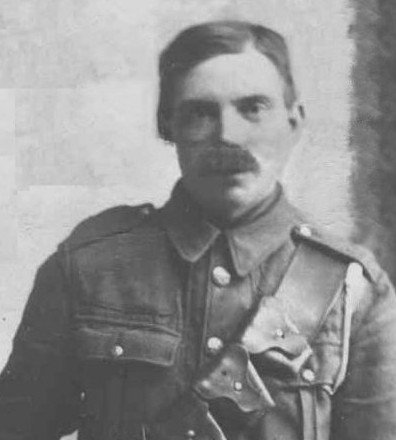
John Emms was born in Carleton Rode on the 11th of October 1879, the seventh of twelve surviving children born to Henry and Rebecca (nee Hawes).
The following family history background provides some context for the two Emms brothers on Carleton Rode’s WW1 Roll of Honour Board (also see Fred Emms).
John’s father, Henry, the son of an agricultural worker, was born and raised in North Lopham (a village about ten miles south), who had served an apprenticeship and become a journeyman bricklayer, a skilled tradesman.
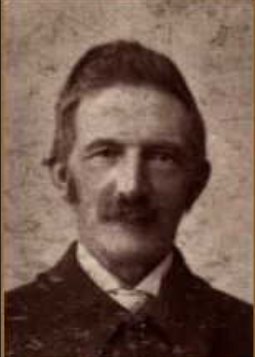
By the mid-1860s, Henry had moved to work in Carleton Rode and in 1867, he married local girl, Rebecca Alice Hawes (born here in 1849).
Rebecca was the daughter of a weaver – indeed the whole family were involved in handloom weaving and related tasks; bobbin winding, nett silk drawing and setting up the loom for producing silk, and worsted, fabric. Her family can be traced back several generations in All Saints’ Church registers and some are buried in the Baptist Churchyard too.
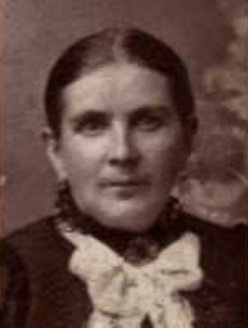
On the 1851 census, the Hawes children were working from around 7 years of age – and although a school had been established in the village since 1822, school attendance was not made compulsory until the 1880 Education Act. On the 1861 census, Rebecca, aged 11, was described as a ‘worsted and silk weaver’ and would have had little formal education.
The Hawes were one of the last handloom weaving families in the village as even when Rebecca was born, this home-based industry had been in decline since the 18th century – the golden age for weaving in Norfolk. By the end of the 1700s, foreign wars, primarily the American War of Independence, had caused lay-offs and unemployment – and then, during the first half of the nineteenth century, the explosion of growth in the mechanised textile industry in the north of England, especially in the West Riding of Yorkshire, meant several families in Carleton Rode and their relatives in other local villages, relocated to the towns around Bradford. For weaving families like the Hawes, who chose to remain in Norfolk, they had to adapt to a different way of life – which usually meant agricultural labouring. When Rebecca married a skilled bricklayer, this was a trade also in transition from traditional handmaking to industrial-scale machine production to provide materials for the rapid expansion of new brick-built housing and which was also replacing the old timber-framed buildings, both domestic and agricultural, in Norfolk’s towns and villages.
Rebecca and Henry lived on the Flaxlands (further evidence of the village’s historical connection to textile production), on a road that is now called Rode Lane (but which many of the older residents still call ‘Rod Lane’). Rebecca bore 14 children between 1868 and 1891, but tragically a daughter born in the mid-70s lived for less than a year, and another daughter, born ten years later, lived for only a few weeks.
John Emms was born at the end of the 1870s and like many of his siblings attended Carleton Rode School. Log books were kept sporadically from the 1860s and unfortunately ‘proper’ registers of children with dates of birth, details of parent, dates of admittance and leaving etc were only kept from late 1896 onwards – which means that while none of the Emms children appear in the Registers, some of them are in the Logs from about the mid-1880s when named individuals begin to appear (before that it simply states ‘admitted one girl/boy’ etc.) As will be seen, these give us a flavour of the Emms’ life in the village.

The 1880 Education Act had finally made attendance compulsory for children between the ages of 5 and 10 – although fees of 1d (a penny) or 2d per week were still payable and, as a skilled tradesman, Henry was expected to pay the higher amount for each of his children.
The Logs make fascinating, if sparse, reading. Some topics dominate the entries; the weather and its adverse effect on attendance (too wet, too cold, too hot, too stormy), Fridays are often ‘thin’ (fewer pupils present as they were required to help at home or in the fields – which seems to be a long-held precedent). Illness features frequently (mumps, measles, whooping cough, scarlet fever – and many of these outbreaks close the school for several weeks at a time) as well as influenza, persistent coughs and virulent colds. This was also a difficult time for recruiting a properly qualified teacher.
During this period, the school had a Headteacher and assistant teacher (which could be a Pupil Teacher or Monitor) – and if the headteacher was a married man, then his wife would usually be responsible for teaching the Infants. School numbers vary tremendously (anywhere between 70 and 100) but by the time that John was admitted to school in April 1884, the average attendance has dropped to around 60.
John was reported to be an ‘irregular’ child (poor attendance), often off with colds. In 1887, his sister, referred to as Ann (this is probably Martha Ann, born in 1881), was sent home with ‘several ringworms on her face’ – a highly contagious skin disease, common amongst schoolchildren, especially in homes with crowded living conditions and poor hygiene. It was hard to treat and painful for the sufferer, often taking over a year to effect a cure.
1887 was clearly a difficult year for the Emms as the Log notes that the family were in receipt of poor relief from the local Board of Guardians – and the Relieving Officer visited the school on two occasions to pay school fees for the children from July to the end of the year. One other family in the village received the same help. Perhaps Henry could not work during that period? The older children would be able to bring in some money during the hay and harvest months, but it would be very little. Also, that summer, John’s mother, Rebecca, was heavily pregnant with her twelfth child. Sadly, the baby girl, baptised Minnie on the 4th November in Carleton Rode church, died shortly afterwards.
It is a few years before John appears in the Log again, at the beginning of January, 1891, when he ‘fails his arithmetic for the previous year’, one of a handful of children, and has to retake it – which would mean being placed with younger children (not sure this would go down well with an eleven year old who would be hoping to leave school after his 12th birthday).
A new headteacher had arrived at this point, and she tries a variety of inducements to increase regular attendance at school. Perhaps the following was the most popular. Each week, on a Friday, all children with full attendance, received a ½d (halfpenny) ‘token’ – probably to be spent on a ‘ha’penny chew’ in Tricker’s shop on the Flaxlands.
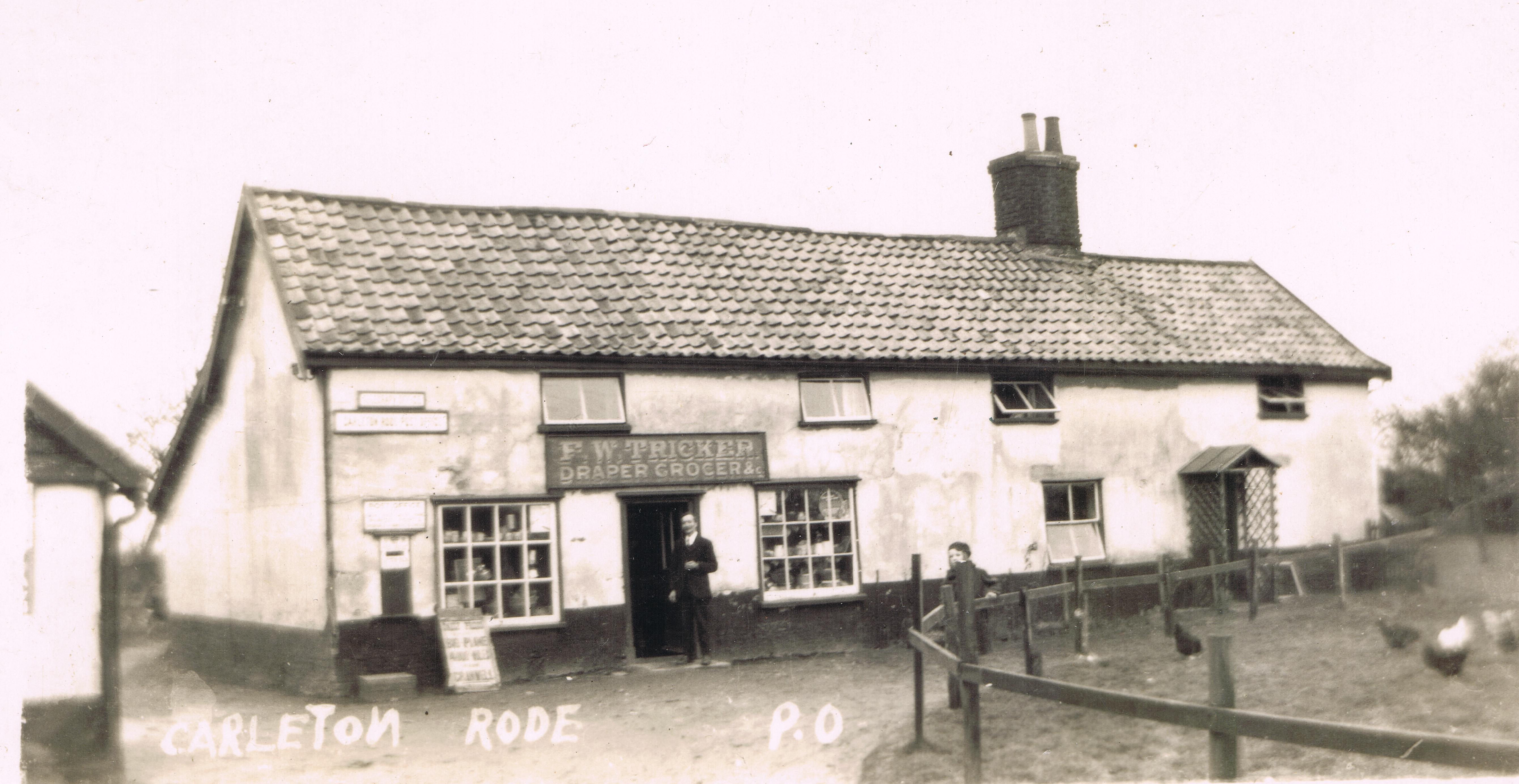
Around 40 children received this sweet treat each week during March and April, but sadly not all of the Emms family – this time it is John’s younger sister, Edith, who is reported, with three others, as being ‘all very backward and incorrigibly irregular’ and are dropped to the previous standard.
Later that year, the headteacher resigned – lasting less than a year – just as Kate Emms, aged 6 was admitted (so a year older than she should have been) and John would probably have left later that same year (1891). The school went through two difficult years, failing to find a permanent headteacher and therefore very little is recorded in the logs. (See Fred Emms’ page for more information).
After leaving school, John found work as a labourer, perhaps farming or building work, as we know that in 1897 (whilst he was working for his father, Henry), he travelled in early January to the Britannia Barracks in Norwich and joined the 3rd Battalion of the Norfolk Regiment (the Militia) signing on for a period of six years. At 17, he was 5’ 3” (three inches shorter than the average male at the time) with hazel eyes and brown hair. He passed his medical examination, was declared fit to serve – and duly attested.
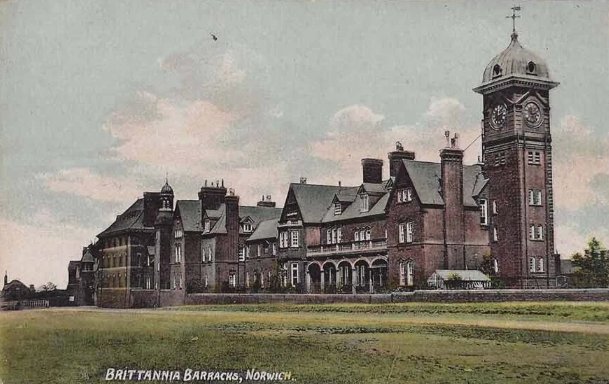
However, John immediately had second thoughts as the next day he returned to the Regimental Headquarters in Norwich and bought himself out of the Militia – a discharge by purchase – which cost £3 (approximately £350 in today’s currency), about a month’s wages for an unskilled labourer.
After this, John, together with his younger sister, Edith, went to London in search of work and perhaps a different life. In 1901, they were living with their older sister, Jane, and her young family in Fulham.
During the 1860s, numerous families from Carleton Rode moved to the capital looking for better opportunities in the rapidly expanding metropolis, especially those skilled in brick making and laying, as well as unskilled labourers (navvies) building roads, railways, sewers etc. Several members of the Smith family, who lived on Flaxlands and were neighbours of the Emms, had relocated to London – one of whom married one of John’s older sisters, Jane Emms. Her husband, James, had used his experience with horses to find work as a groom and cab driver. John was also skilled in looking after horses and so found similar work – there were an estimated 300,000 horses working in London at the turn of the 20th century as almost every vehicle on the city’s streets was horse-drawn. His sister, Edith, at 17, worked as a ‘domestic nurse’ which probably meant that she was also helping look after Jane’s four children – all under 7 in 1901.
We don’t know how long the siblings lived in London, but we know that they returned to Carleton Rode as they were both married in 1909; in October, John married (Emily) Rachael Breeze in Bunwell Church and on Christmas Day, Edith married local man, Walter Chapman, in All Saints’, Carleton Rode.
Edith and Walter’s second daughter, Mildred – ‘Millie’ – had wonderful stories about the families that she recalled living in Carleton Rode in the first half of the 20th century when she was a girl, as well as snippets regarding wider family members, including several Emms’. Fortunately, her son, Phil Bowden, wrote these down and was kind enough to send us a copy. You can read much of this on Walter Chapman’s page – another of our First World War survivors. We also know from Millie that her uncle, John Emms, was always known as ‘Jack’ (but for consistency, John is used in this biography.)
John’s bride, Rachael Breeze, was born in Wymondham on the 29th of December 1880. Rachael’s father was a farm labourer but her grandparents, James & Emily, were publicans, running the Sawyers in Suton before coming to Bunwell in 1888 and, alongside four of their six adult children (those who had not yet married), took over the Crown & Anchor inn. James died unexpectedly two years later, and Emily took over the license. Ten years later, Emily is running the pub with her granddaughter, the twenty-year-old Rachael, and her recently returned son, Charles, who had served in the army.
After their marriage, John was granted the License for the Farrier’s Arms on the Mile Road in Carleton Rode (and although in a different parish, it is just half a mile further along the road from the Crown & Anchor – which was still being run by Rachael’s family members).
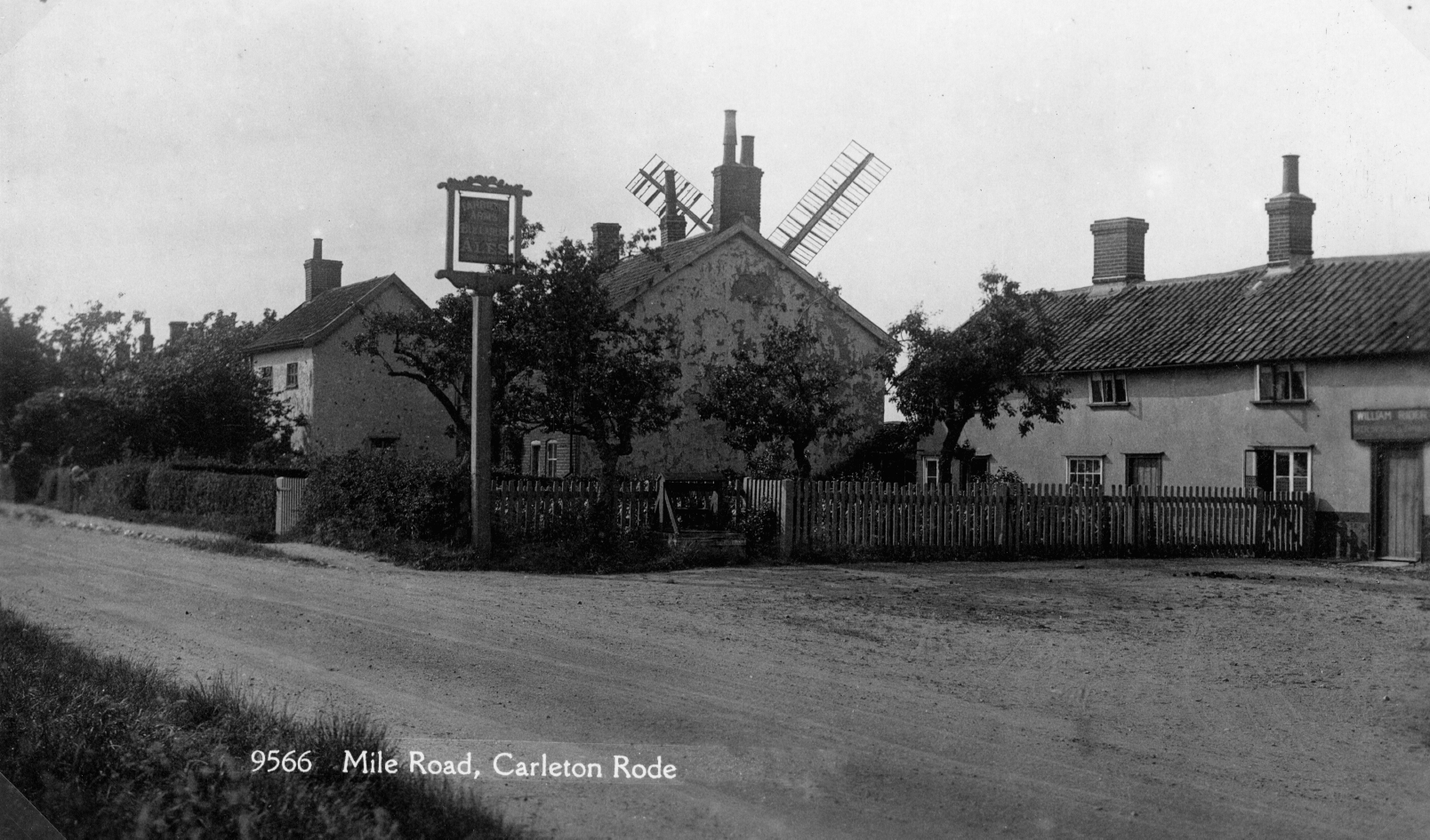
The Farrier’s Arms was locally referred to as ‘The Crow’ (our elderly neighbours hereabouts can still remember the nickname which they say references the pub as being the hub for village gossip!) It was brewery owned and came with 4 acres which the publican cultivated – a very common arrangement in pubs at the time and which John would have utilised. Contemporary advertisements during John’s time as the Licensed Victualler, and placed in local newspapers, give us a fascinating insight into the growing political awareness of Norfolk agricultural workers of the time.
The meadow belonging to the Farrier’s Arms was used for a rally of the Agricultural Labourers’ Union in June 1914 and was very well attended. John’s brother, farm labourer Charlie (Charles Ernest Emms) was very active in the Union and the following spring, he arranged for the teacher and union activist Tom Higdon to speak at a meeting held in the pub. Tom, together with his wife, Annie, had come to teach in Norfolk in 1902 and over several years had been campaigning for change, highlighting the need to enforce compulsory education (many children were still not attending school regularly) exposing the poor housing conditions that existed for low-waged rural families and challenging the local ruling elite who were keen to retain the status quo.
The Higdons had recently been sacked from nearby Burston School by the Norfolk Education Authority. However, Annie and Tom were very popular with local people, and their pupils were outraged by this unjust act and so they went on strike. The Higdon’s found temporary teaching places in Burston before they had enough funds to build their own (independent) school, and most children in the village attended. The Burston School Strike, as it became known, lasted for 25 years. It is fascinating to think that when Tom addressed the farm workers in the Farrier’s Arms in Carleton Rode, he could not have known how influential he and his wife would be in the history of trade unionism. Today, the Burston School Strike Rally takes place in the village every September celebrating the historic dispute and welcomes visitors from all over the world.
John had been landlord of the Farrier’s Arms for four years when the First World War erupted. Indeed, his youngest child was born on the day that war was declared, the 4th August 1914. He and Rachael had three children: Doris Maud (born in 1910), Ethel Beryl (born in 1912) and Bertie John (1914). Just before Christmas of that year, when John was 35 years old and had three children under 4 years of age, he travelled to Norwich and enlisted into the Army Service Corps (ASC).
Perhaps the advert for the ASC shown here might help to explain John’s decision.
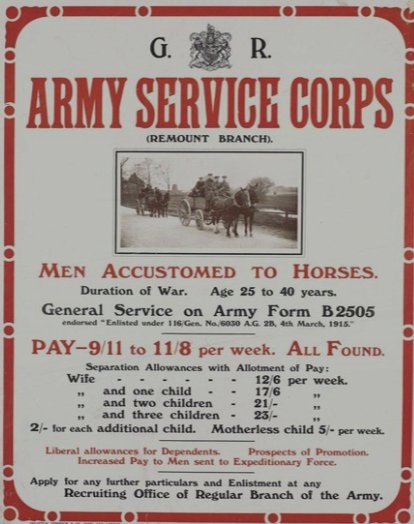
The pay for men enlisting who had a wife and children must have been very tempting.
Rachael was experienced in running the pub (and she also had relatives nearby in both Bunwell and Carleton Rode) – and women were also very keen to ‘do their bit’ in support of their menfolk going overseas.
It is also interesting that John, on his enlistment papers, took three years off his age, stating that he was 32 (and he had given his correct age on the previous census in 1911 – did he think that the army might not take him as being too old, although he was well within the age quoted on the ASC poster?)
John enlisted as a Driver of horse transport, Service Number T4/38096. A week later, on New Year’s Eve, 1914, he presented himself at the Woolwich transport headquarters in London, and in little more than a month, had joined the British Expeditionary Force on a ship bound for France.
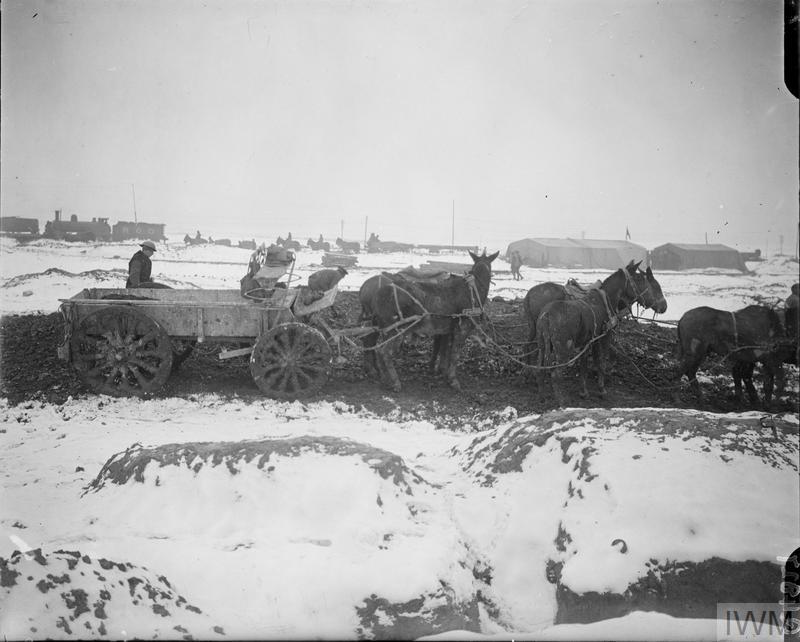
John served with the 3rd Divisional Train, part of the Army Service Corps (ASC), which provided vital horse-drawn logistical transport during World War I, moving supplies, ammunition, and equipment to the front line. When moving, a divisional train would officially occupy a mile of road. At its peak the ASC numbered over 300,000 men and an incredible 870,000 horses and mules.
Back at home, Rachael, for whatever reason, had not been able to take over as the Licensee of the Farrier’s Arms after John’s departure and so, ten months later, in October 1915, Bullards (the brewery who owned the pub) placed an advert for a new tenant as Rachael moved out. We know from the Carleton Rode school register that on the 18th of that month, oldest daughter, Doris, started in the Infants aged 5, and that Rachael was living on Flaxlands. It seems likely that she and the children had gone to live with John’s parents, Henry & Rebecca. By this time, Henry, perhaps too old to continue bricklaying, had become a full-time poultry dealer.
John served overseas until September 1918 and was then transferred to the Reserve Depot at Park Royal in Blackheath, London.
After the end of the war, John was discharged from the Woolwich headquarters of the ASC in January 1919. He had been in the Army for over four years; described on his release paper as ‘of good sobriety, intelligent and reliable’. When we look at the photo of the family with John in his army uniform, probably taken on his return from the Front in October 1918, it is likely to be the first time that his wife and children had seen him for three and a half years. Difficult times of readjustment for all concerned.
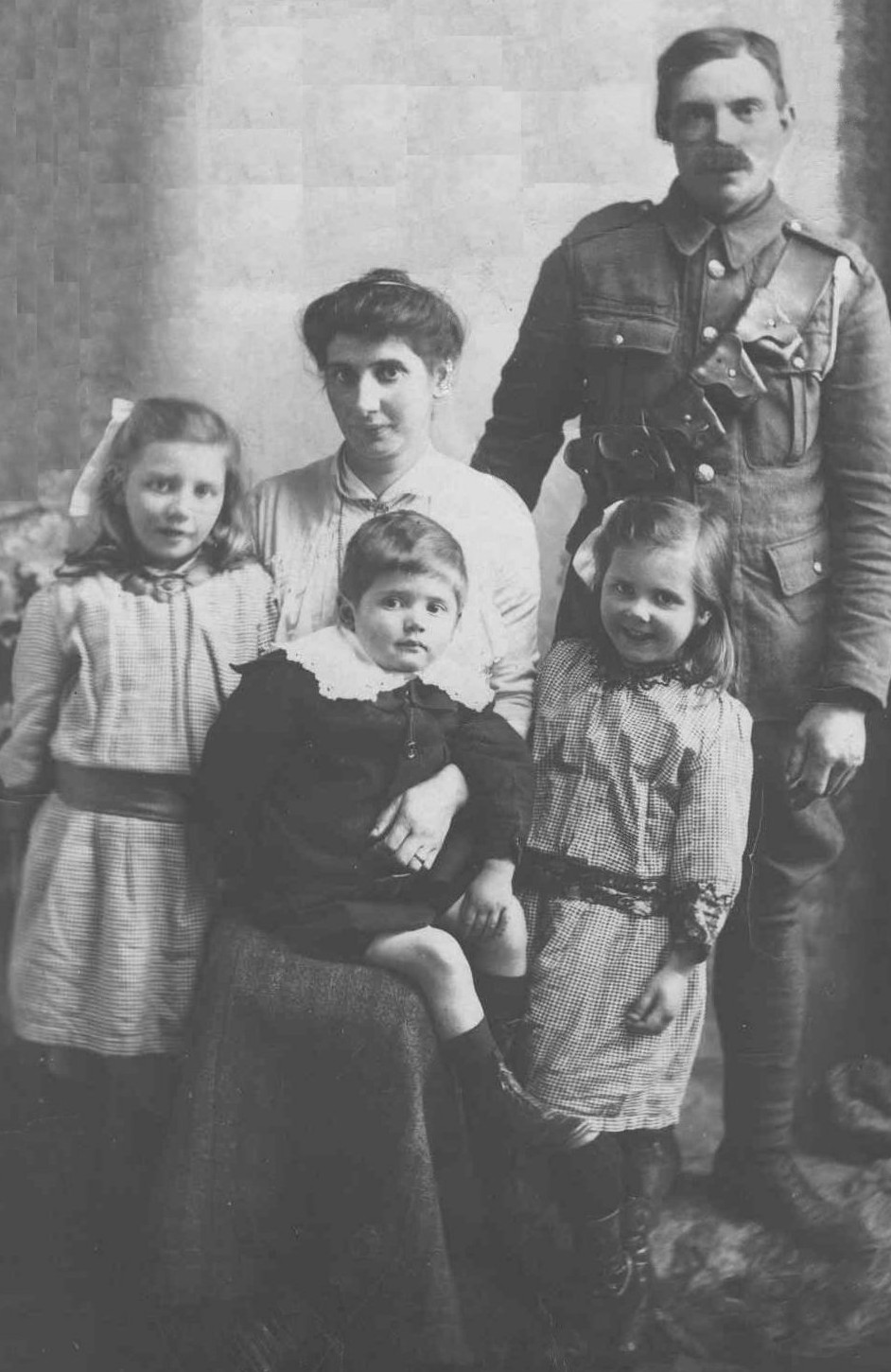
Within two years, John and his family had moved a little further along Flaxlands, close to The Plough pub. John is described as a farmer working on his own account and he also employed his brother-in-law and farm labourer, Walter Palmer, husband of his older sister, Alice. John’s three children all attended Carleton Rode School and are recorded in the registers. (Doris proved to be an exceptional scholar, passed the scholarship for the Girls’ Grammar School in Thetford and was awarded a bursary by the Norfolk Education Authority.)
This was also the same year, the spring of 1921, when John’s youngest brother and war survivor, Fred Emms, married and then immediately left for a new life in Canada.
The years following the First World War were marked by severe and prolonged economic depression; unemployment stood at 17%. Norfolk, which relied heavily on farming, suffered from falling food prices and the end of guaranteed subsidies which had supported agriculture during the war, leading to cuts in wages (which were already historically very low) and the resulting deepening poverty. Things came to a head in 1923 when many Norfolk farmers attempted to slash wages and increase working hours for agricultural labourers. This resulted in the landmark Norfolk agricultural workers’ strike, involving over 6,000 members of the National Union of Agricultural Workers (NUAW), many of whom were war veterans.
The strike affected Carleton Rode too – search in our Survivor books to read the personal recollections of another of our WW1 survivors, Harry Levi Smith, who worked at Old Hall Farm.
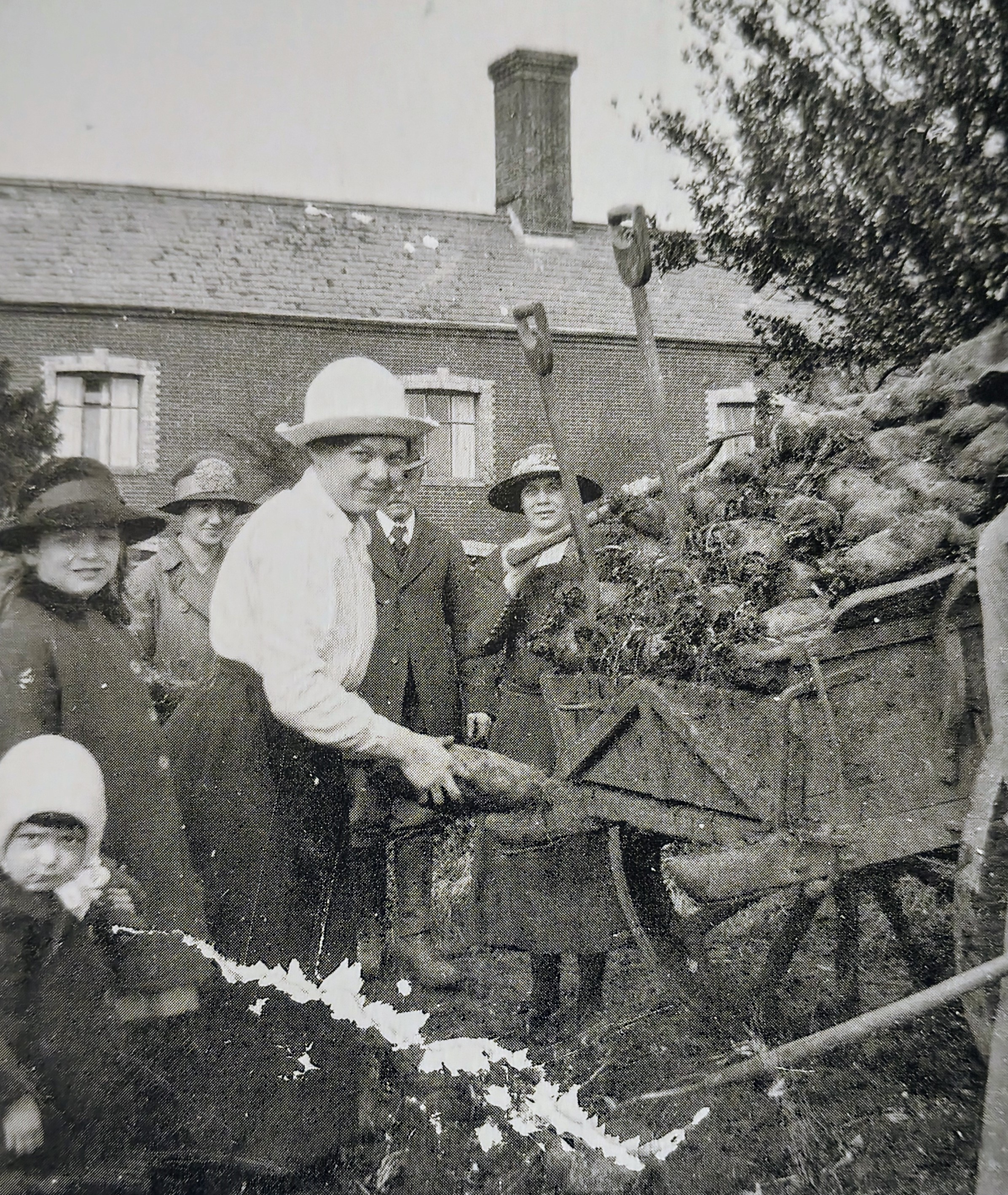
This photograph, courtesy of Carleton Rode History Group, shows farmer James Clarke’s daughters stepping in when Harry and his fellow farm labourers went on strike. This would certainly have included John’s brother, Charlie, who, as we have already seen, was active in the Union.
The government’s 1919 Land Settlement Act had attempted to help support ex-servicemen by enabling local authorities, including Norfolk County Council, to buy land and equip smallholdings for returning soldiers.
We don’t know if John was able to take advantage of this initiative, but in October of 1925, he and his family moved to Mill Farm in Shropham, and then, in the 1930s, to farm at nearby Hockham Lodge in Great Hockham.
On the 1939 Register taken at the beginning of the Second World War, John and Rachael were living with their son Bertie (who helped to run the farm), their married eldest daughter, Doris (the grammar schoolgirl became a teacher), and her husband, Robert Allen, who worked in the local general stores and Post Office. The register also notes that he was a Special Constable during the war. John and Rachael’s other daughter, Ethel, had married a local baker, and so was living nearby with her family in the Bakehouse at Shropham.
John died in 1959, and Rachael in 1973.